15 questions to ask the interviewer (for tech roles), and which round to ask them in
TL;DR
- Always have 2 or 3 questions ready. Saying "no, I'm good" can come across as low interest.
- Match the question to the person: process and salary range with the recruiter, success and challenges with the hiring manager, day-to-day work with engineers, direction and growth in the final round.
- Avoid questions the job post or website already answers, and save detailed benefits questions until you have an offer.
"Do you have any questions for us?" sounds like a polite ending. It isn't. Interviewers use it to judge how interested and thoughtful you are, and it's your best chance to find out whether you actually want the job.
Here are 15 questions that work for software, data and AI roles, grouped by the round where they fit best.
Try the free Interview Question Predictor
Paste a job description, get the 10 questions you're most likely to be asked, with answer tips. No sign-up.
Match the question to the person
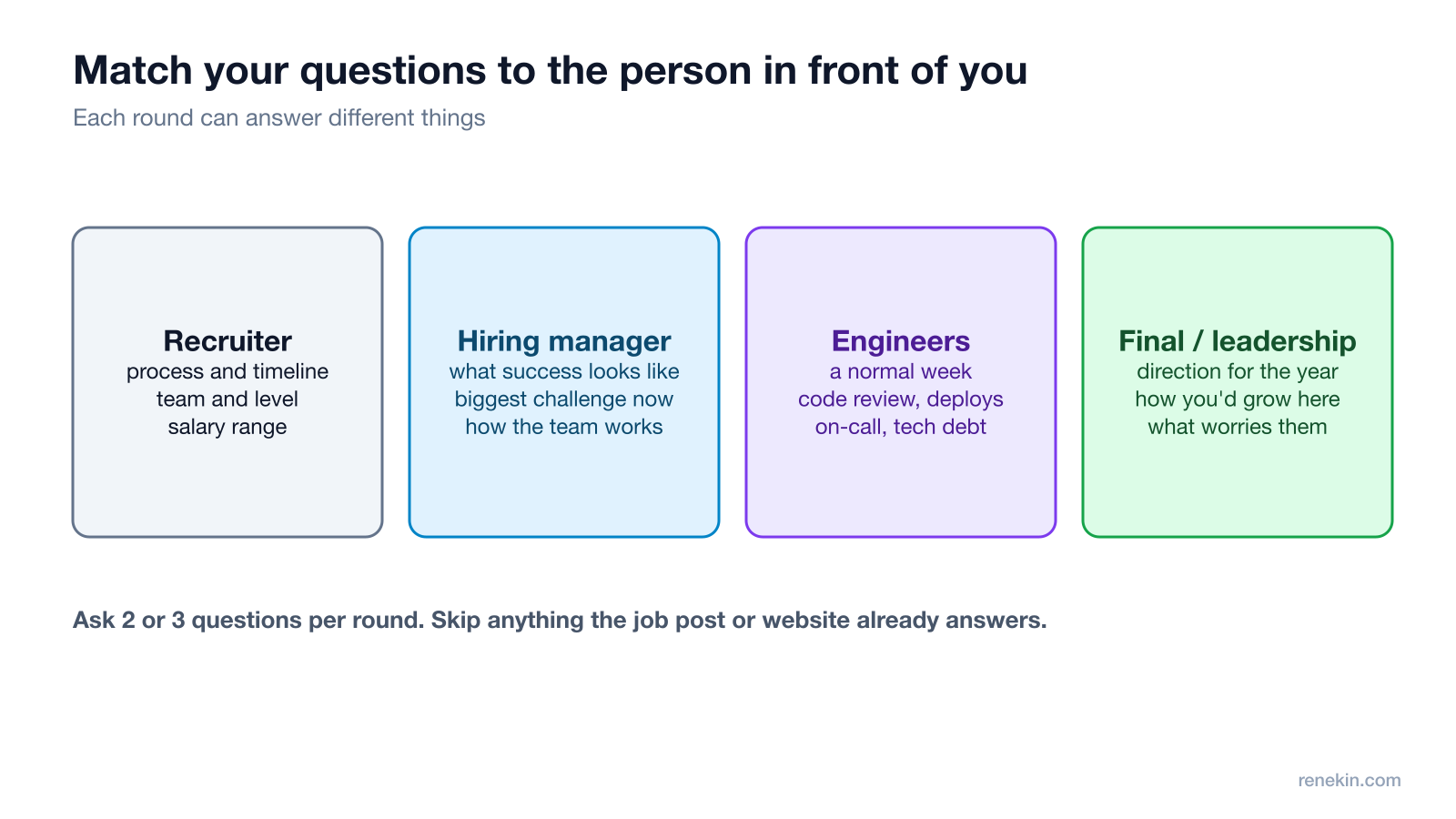
A recruiter can't tell you how code review works, and a senior engineer probably can't tell you the salary band. Asking the right person makes you look prepared and gets you real answers.
Recruiter round
1. "What does the rest of the process look like, and what's the timeline?" Practical, and it helps you plan around other interviews and offers.
2. "What's the salary range for this role?" Normal to ask a recruiter, and in some places the range must be in the job post anyway. Knowing it early saves time for everyone. Our guide on answering salary expectation questions covers the other side of this conversation.
3. "Which team would I join, and what level is this role?" Titles mean different things at different companies. The level tells you what's expected.
Hiring manager round
4. "What would success look like in this role after three to six months?" The single most useful question. The answer tells you their real expectations, and you can mention it in later rounds.
5. "What's the biggest challenge the team is facing right now?" You learn what you'd actually be working on, and you get a chance to say how you'd help.
6. "Why is this role open?" New headcount (the team is growing) or a replacement? Either is fine; the way they answer is informative.
7. "How do you give feedback, and how often do you have one-to-ones?" Tells you a lot about how you'd be managed.
8. "What's the difference between someone who does well in this role and someone who does great?" Shows ambition without sounding like you're already asking for a promotion.
Engineer or peer round
9. "What does a normal week look like for you?" Meetings vs focus time, how work gets assigned, and how much is new building vs maintenance.
10. "How does code go from a pull request to production?" Reveals code review culture, testing, CI/CD and deploy frequency in one question. For data or AI roles, ask: "How do models or prompts get evaluated before they ship?"
11. "How does on-call work here?" Important for backend roles. How often, how many alerts, and what happens after an incident.
12. "What's something you'd change about how the team works, if you could?" Engineers are often refreshingly honest. Listen for tech debt, unclear priorities or slow processes.
Final round or leadership
13. "What are the team's or company's main goals for the next year?" Shows you think beyond your own tasks, and tells you whether the role matters to those goals.
14. "How do people usually grow from this role?" A better version of "How fast can I get promoted?"
15. "Is there anything about my background that makes you unsure I'm the right fit?" Bold but effective. It gives you a chance to address a doubt while you're still in the room. Ask it calmly, and answer the concern briefly and factually.
Questions to avoid
- Anything the job post or website answers. "What does the company do?" shows you didn't prepare.
- Yes/no questions. "Do you like working here?" gets "yes". Ask "What do you like most about working here?" instead.
- Detailed perks and leave questions before an offer. Ask them once you have an offer and are deciding.
- "Did I get the job?" It puts the interviewer in an awkward spot. Ask about next steps instead (question 1).
How to use the answers
- Take notes right after each interview. Answers from different people often reveal patterns, good or bad.
- Refer back to them. "In my last round, I heard the main challenge is migrating to the new platform. I did something similar at..." is a strong move.
- Use them in your decision. If three people describe constant firefighting, believe them.
Prepare the rest of the interview too
The end of the interview matters, but most of the score comes before it. Our free interview question predictor tells you which questions to expect for a specific job description, and our guides cover tell me about yourself, STAR method answers and your greatest weakness.
Frequently asked questions
How many questions should I ask at the end of an interview?
Two or three is usually right. Prepare five or six so you still have some left if earlier ones were answered during the conversation.
What is the best question to ask at the end of an interview?
"What would success look like in this role after three to six months?" works in almost any round. It shows you're thinking about doing the job well, and the answer tells you what they really expect.
Is it okay to ask about salary in the first interview?
With a recruiter, yes: asking for the salary range for the role is normal and saves everyone time. With engineers or the hiring manager in early rounds, it's usually better to wait.
What questions should I avoid asking?
Anything answered in the job post or on the company website, "How quickly can I get promoted?" in the first round, and detailed leave or perks questions before an offer. Also avoid yes/no questions; open questions get better answers.
Try Ghost free
20 free credits, every feature unlocked, hidden from screen share. No card, no subscription.
Download Ghost